Nov 29, 2009

Spain Travel Guide - Through Pictures


Spain is the place to be if you’re into history, culture, partying or simply sightseeing. Oh yes, Spain is all about tourism. See for yourself! These pictures will be your travel guide.


Ibiza


Party Hard


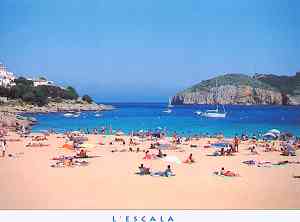
One of four Islands in the archipelago called the Balearic Islands. Ibiza is one of the most popular travel destinations in the Mediterranean Sea. I just love these sunny shallow waters.

Image Source: MAPLR

If partying is your thing, Spain is your home. Ibiza and other surrounding islands in the Mediterranean Sea will wear you out with excitement on your vacation!

Image Source: Ibiza Spotlight


Camp Nou – The Football Stadium


Canary Islands


This 5-star stadium is the largest in Europe. It hosted the 1999 UEFA Champions League and several concerts by the likes of Frank Sinatra, U2, Madonna and Pavarotti.  

Image Source: The Off Side

Fish shoal near the Canary Islands, which is another popular archipelago for vacations. This is why I wish I lived underwater.

Image Source: Mirror AU


Majorca Garden


Temple Expiatori de la Sagrada Família / "Expiatory Church of the Holy Family"


This painting, which shows Spain at her best, needs to no explanation. It’s pure beauty.

Image Source: Eric Thompson

Its construction was started in 1882 and it will finish in 2026. That’s simply overwhelming. This huge catholic church is privately-funded and showcases exceptional décor.

Image Source: Art Dot Com


Guggenheim Museum


Sierra Nevada Mountains


Exceptional exhibits of modern and contemporary art rest within this abstract building, which inspired similar buildings around the world.

Image Source: E-architect

A small lake in the Sierra Nevada mountain range, where the sun meets the snow. This tourist spot is also a great place to ski.

Enlarge Image: Astronomy Notes


Cave of Altamira


Flat White Beaches All the Way


Take a tour of pre-historic cave drawings of wildlife as old as 18,500 years are found preserved. No wonder it’s been declared a World Heritage Site by the UN.

Enlarge Image: ExPasy

The warm weather and white sand makes for a perfect getaway.

Image Source: LA Trobe


Cathedral of San Salvador

Alhambra


This is a piece of history on its own. It was founded in 781 and developed by several generations of kinds. Several Saints and Queens were buried here alongside their royal relics.

Image Source: Getty Images

A series of palaces built by Muslim and Christian rulers over the centuries is a major tourist attraction for it represents the legacy of Muslim and Christian architecture and politics. Yet another World Heritage Site.  

Image Source: Chotto Sukidakara


Churros – The Sausage Donut

Roman Theatre in Mérida


These Spanish Donuts are a popular snack in the Caribbean as well. They look delicious!  

Image Source: Taco Barn Mexican Food

Gladiators fought to death and actors brought alive the theatre while hundreds of spectators looked on in this theatre, which dates back to 15 B.C. Another World Heritage Site built by the Roman Empire.

Enlarge Image: Theodora


Tagus River

Alcázar of Segovia/ Segovia Castle


The longest river in Spain is famous for its beauty. An old song goes, ‘"My hair getting white, the Tagus is always young"

Enlarge Image: Wikipedia

This majestic castle was built alongside rivers by Christian Rulers way back in the 1100s. It certainly doesn’t look like other castles (it has a bow like a ship!) and has been used as a fortress, prison, and a royal palace.

Image Source: Wyntons World


Where exactly is Spain?


Spain is located in southern Europe, right below France and next to Portugal.  

So if you’re planning a trip to Spain as part of business travel or your much-deserved vacation, make sure you visit all these sites and taste the country’s true flavor. Its warm sunny beaches, bustling night life, and historical significance have made Spain perfect for travel and tourism.  

Nov 27, 2009

Nature Quotes


Here are my favourite quotes about nature (taken from various websites)...

Ralph Waldo Emerson
The earth laughs in flowers.
Nature is the art of god.
Adopt the pace of nature:  her secret is patience.
The charming landscape which I saw this morning is indubitably made up of some 20 or 30 farms. Miller owns this field, locke that, and manning the woodland beyond. But none of them owns the landscape. There is a property in the horizon which no man has but he whose eye can integrate all the parts, that is, the poet.
Logan Pearsall Smith
What humbugs we are, who pretend to live for beauty, and never see the dawn!
Anne Frank
The best remedy for those who are afraid, lonely or unhappy is to go outside, somewhere where they can be quiet, alone with the heavens, nature and god. Because only then does one feel that all is as it should be and that god wishes to see people happy, amidst the simple beauty of nature
Blaise Pascal
The least movement is of importance to all nature. The entire ocean is affected by a pebble.
Nature is an infinite sphere of which the center is everywhere and the circumference nowhere.
Claude Monet
The richness I achieve comes from nature, the source of my inspiration.
Francis Bacon
We cannot command nature except by obeying her.
Frank Lloyd Wright
Study nature, love nature, stays close to nature. It will never fail you.
Galileo
The sun, with all those plants revolving around it and dependent upon it, can still ripen a bunch of grapes as if it had nothing else in the universe to do.
Anton Chekhov
Man has been endowed with reason, with the power to create, so that he can add to what he's been given. But up to now he hasn't been a creator, only a destroyer. Forests keep disappearing, rivers dry up, wild life's become extinct, the climate's ruined and the land grows poorer and uglier every day.
Henry David Thoreau
My profession is always to be alert, to find god in nature, to know god's lurking places, to attend to all the oratorios and the operas in nature
If a man walks in the woods for love of them half of each day, he is in danger of being regarded as a loafer. But if he spends his days as a speculator, shearing off those woods and making the earth bald before her time, he is deemed an industrious and enterprising citizen.
James Russell Lowell
A weed is no more than a flower in disguise.
John Burroughs
Nature teaches more than she preaches. There are no sermons in stones. It is easier to get a spark out of a stone than a moral.
Linda Hogan
There is a way that nature speaks, that land speaks. Most of the time we are simply not patient enough, quiet enough, to pay attention to the story.
Rachel Carson
Those who dwell, as scientists or laymen, among the beauties and mysteries of the earth are never alone or weary of life.
Home of nature's most exquisite handiwork is on a miniature scale, as anyone knows who has applied a magnifying glass to a snowflake.
Richard Dawkins
After sleeping through a hundred million centuries we have finally opened our eyes on a sumptuous planet, sparkling with color, bountiful with life. Within decades we must close our eyes again. Isn't it a noble, an enlightened way of spending our brief time in the sun, to work at understanding the universe and how we have come to wake up in it? This is how i answer when i am asked -- as i am surprisingly often -- why i bother to get up in the mornings.
Desiderata                                                                             
You are a child of the universe, no less than the trees and the stars; you have a right to be here.
Catlin Matthews
Keep your sense of proportion by regularly, preferably daily, visiting the natural world.
Jane Austin  
To sit in the shade on a fine day and look upon the verdant green hills is the most perfect refreshment.
Iris Murdoch
People from a planet without flowers would think we must be mad with joy the whole time to have such things about us.
Shakespeare
Love comforteth like sunshine after rain.
Vincent Van Gogh
I myself am quite absorbed by the delicate yellow, delicate soft green, delicate violet of a ploughed and weeded piece of soil.
Chinese Proverb
Whoever loves and understands a garden will find contentment within.
Plautis
The day, water, sun, moon, night - i do not have to purchase these things with money.
Anon
Or happiness, one needs security, but joy can spring like a flower even from the cliffs of despair.
Some people, like flowers, give pleasure, just by being.
Dorothy Parker
Flowers are heaven's masterpiece.
June Polis
Sounds of the wind or sounds of the sea make me happy just to be.
J.M. Barrie
God gave us memory so that we might have roses in December.
Greek Proverb
A society grows great when old men plant trees whose shade they know they shall never sit in.

Nov 25, 2009

Water Found on Moon: “Unambiguous Evidence”


It’s official. Frozen water has been found on the Moon, NASA confirmed today. The $79 million spacecraft, LCROSS, launched in July, managed to find around a dozen buckets of water in a permanently shadowed crater, Cabeus, in the South pole.


“The argument that the moon is a dry, desolate place no longer holds water”, said NASA today. This news comes a couple of months after this ship found ice on the moon.

How much and how did it get there?
A mere 220 pounds of water, which scientists insist is ‘a significant amount’, was found and this would be enough to fill around a dozen buckets of 2-gallons each. We know the lunar surface is hydrated but are not sure about how this happened. Several theories exist:
  • The sun did it: interaction between solar winds and moon rocks could have generated the water
  • The comets did it: comets carrying ice and water may have impacted with the moon
  • The Clouds did it: giant molecular clouds that passed through the solar system may have played a role
Great Discovery? Perhaps
We had always thought the Moon was bone dry so this is potentially a great discovery for mankind, for lunar water can be used:
  • As drinking water
  • As a source of oxygen
  • As a source of rocket fuel in the form of hydrogen
  • A window in the past of our solar system’s climate (since the water and ice preserve historical data through minerals and other debris)
However, the fact that $79 million were spent on confirming the presence of water which was already discovered by Indians several years ago, makes one wonder if we’re stretching our ambitions in the wrong direction.
Now what?
Scientists are planning to send more probes to the Moon to find other sources of ice which may be usable for the purpose of drinking or rocket fuel or even for setting up a lunar base for man. That’s more tax-payers money being spent on things that do not directly or positively affect us.
Sources: Space.com, Technorati, MSN, Nat Geo, NASA (Image)

Home Page

Leonid meteor showers in November: You May Have the Front Row


Update to post - 

The Leonids failed to impress stargazers even in prime locations in Central and Eastern Asia. Enthusiasts were thoroughly disappointed.

Original post starts here -  

Get ready to enjoy the annual Leonid meteor shower on November 17th, when nature’s live show is at its best in your backyard. The night will be dark so you can easily view up to 300 Leonids per hour depending on where you live on Earth.

Timings and Locations, Please


If you live in the East, you’re in for a treat.
  • Location: Central and Eastern Asia
  • What you will see: up to 300 shooting stars per hour – it’ll be a very intense display of the meteor shower
  • Time: a few hours before and after dawn, but the peak will be just before dawn, as 21:40 GMT
If you’re not in the East, you may still get lucky.
  • Location: North America and Europe
  • What you will see: between 30 to 50 Leonid meteors per hours - a slightly modest show
  • Time: maximum activity will be between 22:30 and 00:30 GMT (or 3:30 and 5:30 am EST)
What are Comets and What are the Leonids
Comets are masses of dust and ice which melt when they approach the Sun so tiny particles, the size of sand grains tend to spread around. These pieces of dust burn up in Earth’s atmosphere which creates meteors, or meteor showers which occur around a dozen times a year.
The Leonids are dust particles belonging to a parent comet named Tempel-Tuttle which orbits the Sun every 33 years. These particles dispersed by the parent comet tend to put up an annual display for a few nights in mid-November.

What’s different this year?
As far back as a couple of decades ago, the Tempel-Tuttle would produce up to a thousand meteors per hour, but as the comet floated into outer space, the amount of Leonids reduced to maybe 10 or 15 and hour. This time, Earth’s atmosphere will meet up with a bigger dust cloud, allowing us to view a spectacular show.
How to spot them


You simply need to do the following:
  1. Turn out the lights
  2. Get cozy in a warm blanket
  3. And look up
Enjoy yourself and remember to take pictures :)

Sources: NASA, Nat Geo, MSN, NASA Gallery (Image 1, Image 2)

Home Page

Myths And Lore About Lunar Eclipses

A very long time ago, many creative minds came up with ideas that were to be associated with lunar eclipses for a very long time. Most of these were, as I said, very creative indeed, but wisdom eventually triumphed and saved the moon from evil spirits! Here are a few stories:
As far back as 2100 BC, the earliest records of the eclipse written by the Chinese tell us that they believed a dragon was engulfing the moon during an eclipse. The ingestion of the moon was extremely gory, with blood spluttering all over. They would beat mirrors and drums and shoot arrows towards the sky to make the beast regurgitate and return the moon to its place. How bizarre!


In a less dramatic belief, the Red Indians thought the moon was a man with 20 wives and numerous pets such as lions, bears and snakes. The man would occasionally bring home some food for his pets but they’d pounce on him because the food didn’t taste very good (he should have used a different Take Away). He would bleed, and that explained the reddish colour of the moon during an eclipse. But one of his wives, a frog, would promptly arrive to his rescue and collect his blood to heal her husband. (Frog wife?)


However, the Greeks were more advanced in astronomy. They used the circular shadow of the earth upon the moon (during the eclipses) to further prove that the earth was round.
Well, history is quite fascinating, but science is more remarkable. Next time you sight a lunar eclipse, you can admire it with full understanding, or remember cool facts about it, and then perhaps, make up your own story to back the episode!


Image: Dell Tacket
Home Page


Cool Facts About Eclipses


You probably already know what lunar eclipses are and how they come to happen but did you also know…
  • Solar and lunar eclipses follow a cycle called Saros and it repeats 18.6 years.
  • A solar eclipse (see image) always occurs two weeks before or after a lunar eclipse.
  • Eclipses very often occur in threes, alternating lunar, solar and lunar.
  • Lunar eclipses can occur up to three times a year.
  • Solar eclipses can occur a minimum of two times a year and maximum of five times a year.
  • Solar eclipses are visible in a narrow path that is about 300km wide.
  • The Stonehenge, a famous Stone Age construction, was used to study the cycles of the moon and sun. It was, therefore, useful to the ancient people of England, to determine the schedule of eclipses.
  • When the entire moon is in the umbra (inner part of the shadow created by the earth), we say the earth is in totality. This can last up to 1.66 hours and allows you to observe small or far-away stars that you couldn’t see before.
Isn’t science remarkable? We’re lucky we understand all these patterns, but our ancestors weren’t as lucky. At times, they were frightened by eclipses and thought them to be ominous, at other times, they attempted to remove their confusions by creating harmless stories about the moon. You can read some of the interesting ones here

All About Lunar and Solar Eclipses


Even seen a lunar eclipse? Aren’t they’re awe-inspiring? While we now admire them this celestial event, before the telescope was invented, people were frightened by lunar eclipses and associated dramatic stories with this scientific phenomenon. But what exactly is a lunar eclipse, and how is it different from a solar eclipse? What are some cool facts about eclipses and what are the myths associated with such happenings?

What is a lunar eclipse
The moon orbits the earth in an elliptic path, while the earth orbits the sun. Sometimes, when the moon appears to be full, it so happens that the sun, earth and moon are aligned in a straight line. The moon (eclipsed object) is behind the earth (eclipsing object), therefore, the earth prevents some or all of the sun’s rays from reaching the moon. The moon, since it merely reflects sunlight, gradually grows smaller and begins to change colour as it passes through the shadow of the earth. Since the earth is round, the shadow cast upon the moon is curved as well.
What is a solar eclipse
A solar eclipse occurs when a new moon comes between the earth and the sun. It is dangerous for the eyes to look towards the sun at this moment because harmful filtered ultraviolet rays can burn vision cells. However, viewing a lunar eclipse without protection does no harm as its light is less intense.
How lunar eclipses happen
As the moon enters the umbra (complete shadow) or penumbra (partial shadow) of the earth, it begins to darken and a cloud seems to appear in front of it. The white area grows smaller and smaller, just as though the moon were completing its monthly cycle, but in a matter of a few minutes! Eventually, the moon crosses the umbra or penumbra, i.e. reaches the other side of the shadow, and it appears again as a new moon.


The entire moon is visible in a matter of just three hours.
Types of lunar eclipses
This simply depends on the position of the moon.
  • In total lunar eclipses, the moon passes directly behind the earth or through the centre of the earth’s umbra. The moon is almost invisible.
  • In partial lunar eclipses, some part of the moon passes behind the umbra, and a reddish-brownish or even orangish colour prevails on the moon.
  • Lastly, in a penumbral eclipse, the moon passes through the penumbra (outer part of the shadow) of the earth. The effect on the moon’s light is not too drastic to be noticed by you or I, because the slight dim in the illumination is only visible in very dark surroundings.
Why the funny colours?
Lunar eclipses are full of interesting facts! For instance, you may have wondered why the moon changes its colour to orange or brown at such moments. It’s simple. When the group of seven colours combined (violet, indigo, blue, yellow, orange and red) to form white light reaches the earth, some of these rays scatter on the earth, while others bend around our planet and reach the moon. The bent rays comprise the orange, red and yellow rays made of longer wavelengths, and are displayed on the moon’s surface.
These changing colours are a source of many myths and folklore about lunar eclipses, which you can read here.


These same colours make the sky ever so pretty at sunset (the end colours of the prism) and dawn (the beginning colours of the prism)! This is because the respective light rays bend at those moments as well. I have only one thing to say; science is amazing.
Home Page

Nov 22, 2009

Carnivorous Plants - What, Where and How


“Looks pretty... smells sweet... let me get a closer look,” thinks the insect when WHAPP! The predator shuts its jaws to trap the prey.

Pop Quiz #1: Which animal is this?


Ans: What? This is no animal; it’s a plant — the Venus Flytrap! It certainly doesn’t seem or sound or behave like a plant, but nothing is what it seems. These carnivorous or insectivorous plants simply behave in a slightly different manner to replenish their nutritious needs — they gobble-up insects!
In an ordinary meal, all carnivorous plants use bait to attract insects into the trap and then kill them to decompose and absorb their nutrients. Now for the gory details...
          The Bait

You probably figured such plants need to be pretty well groomed to entice insects, so they usually are appealing and colourful. However, the bait may vary from plant to plant to make the kill more exciting! Some plants lay out a landing platform in the form of a brightly coloured petal or exude a sweet scent to lead the insect to the trap. Others still smear their plant parts with a sticky or slippery fluid that prevents the prey from escaping. The most welcoming plants prefer to drug the visitor with some narcotic mixture!
If you think that’s rather impolite of the plants, you had better read on!
When the hungry Venus Flytrap is intruded, the jaws protruding from the leaf edges snap shut and trap the foolish insect inside. The bug has only half-a-second to escape and even your reflexes aren’t that quick!
Once the spider or other crawling insect is ‘secure’ the glands on the leaf secrete a fluid that digests the insect’s delicious body. Ten days is all it takes for the insect to disappear off the face of the earth! Then the leaf opts for another helping...
As for the Pitcher plants, just as their name suggests, they have beautiful red tubular leaves that resemble a jug. A sweet tasting juice lures the bug into the pitcher. Upon realizing its stupidity, the bug desperately tries to crawl back up the smooth sides but all in vain. The insect eventually drowns in the pool of digestive fluids at the bottom of the pitcher and that’s the last anyone hears of it.
I admire the Sundews the most; the name sounds poetic, the flower looks exquisitely lovely so one could never guess the real nature of this deceptive plant. The tiny drops of clear fluid on its leaves resemble dewdrops glistening in the sun, hence the name. The ‘dewdrops’ are actually a sticky fluid at the tip of tentacles that attracts and traps insects. To ensure the guest is always ‘served’, the surrounding tentacles bend towards the centre of the leaf, forming a fist that holds on really tightly to the bug.
The digestive juices are excreted by the tentacles and two days later, NOTHING!
Not all carnivorous plants secrete enzymes themselves to digest the prey; they may rely on bacteria or assassin bugs. In the former case, the food just rots and decays to a state where the decomposed molecules can be easily absorbed. In the latter instance, the assassin bugs may live on the carnivorous plants (without being caught) and eat the captured insect. After digestion, the bugs excrete – the excretion is full of nutrients. And you’re lucky you don’t have to eat this way because the plant then absorbs the poop!
Certainly you think, these are one heck of a messed up creatures! But they are merely trying to attain mineral nutrients like nitrogen and phosphorus because they can’t draw them from the infertile soil around them. Carnivorous plants tend to adapt to the moist and nutrient-poor habitat this way, so it’s only survival of the fittest. And that, you cannot condemn!

Pop Quiz #2: Should we beware?


Ans: If you are about a centimetre long and fly about boggy marshes, then yes. On the other hand, if you’re larger than a small insect, you can intimidate these plants all you want without fear because their digestive enzymes are extremely weak. They prefer flies, moths, butterflies, water fleas and other tiny bugs instead of humans. However, frogs have been reported caught by some larger plants.
By the way, in the cartoon world carnivorous plants can do some pretty neat tricks. Morticia (The Adam’s Family) owns an admirable plant, Cleopatra, which often feeds on zebra burgers, yak meatballs and even Gomez’s photographs! Similarly, Homer Simpson (The Simpsons) once had a tête-à-tête with another such plant.
Meat-eating plants contribute more to our lives than cause wonder. Ancient Hindu doctors used Drosera Burmannii (better known as Sundews) to counter skin irritation and the juice obtained by squashing its leaves can remove warts and corns when applied to the skin…because it erodes skin!
In far off countries, physical properties are more efficiently used. For example, in Australia, the sweet syrupy bait is extracted to flavour food and in Portugal these plants are bought for the purpose of reducing fly population. I’m all for the second use; a summer spent in this country will keep the flytrap fully fed.

Pop Quiz #3: So, if they can move, these plants are pretty much like animals, right?


Ans: Not really, because the plants don’t really move about with their own effort. When a Flytrap snaps shut, it is the result of the insect triggering the sensory hairs on the leaf that changes the cells’ rigidity rapidly. The cells on the inside become limp by transferring water to the outer cells, hence the leaf folds.
At times, the size of some cells may change. Half the cells on the tentacles of the sundews outgrow the other half, thus the tentacles bend inward.
You have probably heard about the leaves that wilt as soon as they are touched; they are called Mimosa plants (translated to ‘shame’ in Hawaii and as children we wanted to be the first to enjoy the honour of disgracing them!) but since they move in a manner similar to the one described above, even they cannot be considered gifted.
And besides, plants cannot hear, smell, taste nor see. So any doubts must be banished.
Pop Quiz #4: How many species of carnivorous plants are there?


Ans: So far, about 600 species have been discovered, but they are quickly disappearing because humans have learnt well to destroy their habitats. These ingenious plants surely deserve more than that for they chose a resourceful evolutionary path that baffled humans for ages and suitably continues to deceive insects.
Unless protected, some species of the Pitcher plant will only take 20 years to be added to the ever increasing list of extinct plants.
Nevertheless, it’s a cruel world for an insect and you sure should be thankful to your parents that you’re not one. As for the carnivorous plants, I guess the main reason they chose to adapt this way is because they too got tired of being vegetarians!
Whatever the reason, I admire them. And one day I’d surely like to closely observe the vampire-like event; a forgettable fly and a cute plant share a moment that spelled food for the host and doom for the guest.
Home Page

Nov 20, 2009

American Consumers Are Going Green


American consumers are certainly undecided. While a recent poll showed that belief in global warming was falling, efforts to adopt green living are on the rise as sales of ‘ethical’ products continue to grow. And this desire to pruchase sustainable goods is so strong it is evident despite the recession in the U.S economy.


Green Products


Organic and environmentally sustainable products, which include
  • energy-efficient light bulbs
  • natural lotions
  • recycled paper
  • fresh organic food
are generally expensive because of higher raw-material and processing costs.


The statistics


The sales for ethical and green products will see a rise of almost 9% this year, pushing the market to $38 billion. Not surprisingly, items labelled ‘organic’ saw sales rise upto 17%. These figures were released by Packaged Facts and Organic Trade Association, and reported by Reuters.


Why is this happening? 


Americans are suddenly into buying green because of a number of reasons:
  • President Obama is committed to tackling climate change, despite setbacks
  • Firms selling sustainable products have adopted better marketing, encouraging lifestyle changes and promoting green living methods
  • Consumers want to believe they have the power to positively impact the world given current economic and social hardships
  • Lower prices of organic goods by wholesalers 
  • The EPA is showing interest in global warming too
Is it going to help?


Certainly, considering the role of Americans in global warming. American consumers are solely responsible for around 40% of U.S. and 8% of global carbon emissions, any changes in lifestyles will go a long way as a solution to global warming. Considering the credit crunch and the save-instead-of-spend stance on consumers, this trend in green living is not only worthy of notice, but also appreciation.


Sources: Reuters, Photobucket

Home Page